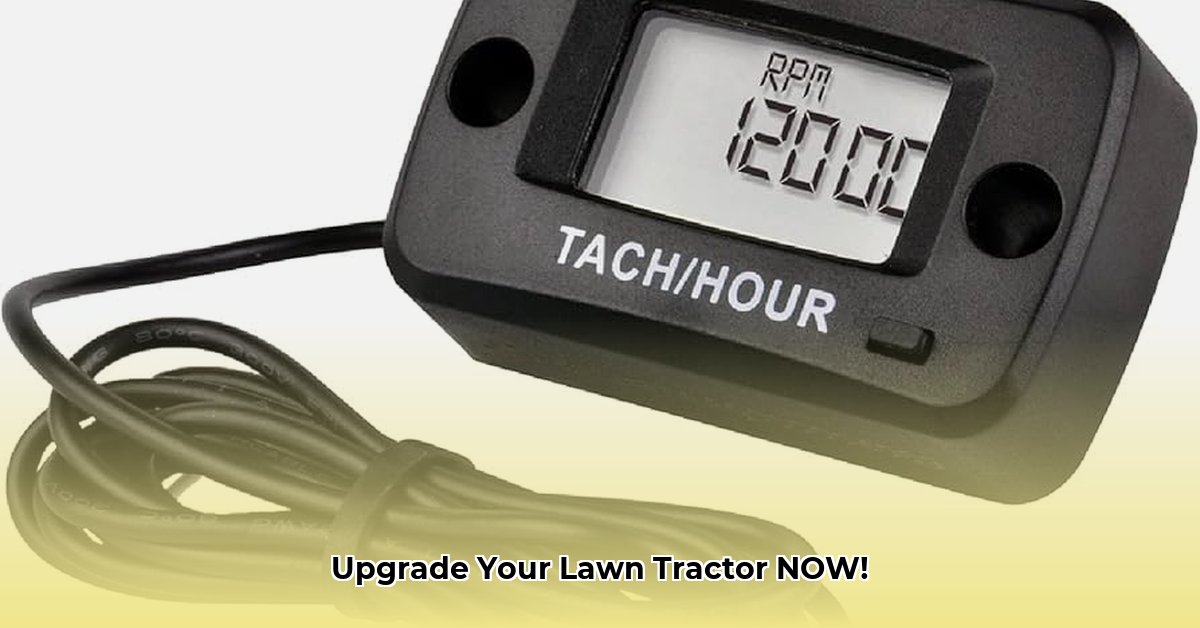
Understanding Your Lawn Tractor's RPM: The Key to Engine Health
Before diving into tachometers, let's understand revolutions per minute (RPM)—the speed at which your engine's crankshaft spins. Why is this crucial? Maintaining optimal RPM is key to preventing engine strain, maximizing fuel efficiency, and extending your tractor's lifespan. Running your engine too slowly wastes fuel and reduces efficiency, while running it too fast can lead to costly damage. A tachometer provides real-time RPM feedback, acting as an early warning system for potential problems. Think of it as a fitness tracker for your lawn tractor's engine. Don't you want to know exactly how hard your engine is working? For more information on lawn tractor maintenance, check out this helpful resource: Husqvarna Lawn Tractors.
Choosing the Right Tachometer: Matching Features to Needs
Selecting the ideal tachometer involves considering several factors beyond just the price tag. Let's break it down step-by-step:
1. Engine Type and Size: A Crucial First Step
This is paramount! The tachometer's RPM range must suit your engine's capabilities. A small single-cylinder engine needs a different range than a larger, multi-cylinder model. Consult your owner's manual for precise RPM specifications. Incorrectly choosing an RPM range can lead to inaccurate readings or damage to the sensor.
2. Feature Set: Essential vs. Luxury
Basic tachometers display RPM. However, advanced models offer extra features. Consider:
- Hour Meter: Tracks engine runtime for scheduled maintenance. This is invaluable for planning and avoiding costly repairs. A well-maintained engine will run for years.
- Data Logging: Records RPM data over time, revealing performance trends. This aids in detecting developing issues before they become major problems.
- Alert Systems: Warn you if the RPM exceeds safe limits, preventing damage to the engine. This proactive function can save you from costly repairs down the line.
Do you truly need these extra features, or will a simple RPM display suffice? Your budget will play a role here.
3. Budget: Balancing Value and Features
Tachometers range widely in price. Establishing a budget before you begin your search will prevent impulse purchases. Don't overspend for features you won't use.
4. Installation: DIY or Professional?
Some tachometers are easier to install than others. If you're not comfortable working on your engine, a professional installation is a wise investment of additional funds. Many tractor owners will opt for professional installation.
Installing Your Tachometer: A Step-by-Step Guide
While specific installation procedures vary by model, the general process is as follows:
- Locate Connection Points: Consult your tachometer's manual to identify the precise connection points on your engine.
- Secure the Sensor: Carefully attach the sensor, ensuring a secure fit. A loose sensor can lead to inaccurate readings.
- Connect the Wires: Connect the wires exactly as illustrated in the manual. Incorrect wiring can damage your tractor's electrical system. Take your time, and double-check your work.
- Mount the Display: Position the display for easy visibility while operating the tractor.
- Calibration (If Necessary): Some tachometers require calibration for accurate RPM readings. Follow the manufacturer's instructions precisely.
Comparing Top Tachometer Models
Note: Specific models are omitted due to rapidly changing availability and technological advancements. The table below offers a generalized overview of different price-performance levels. Always verify compatibility with your specific engine model before purchasing.
| Model | RPM Range | Key Features | Pros | Cons | Approximate Price Range |
|---|---|---|---|---|---|
| Basic Model | 0-6000 RPM | Simple display | Easy installation, good accuracy | Limited features | $50-$75 |
| Mid-Range Model | 0-10000 RPM | Data logging, alerts | Advanced features, high accuracy | Moderate installation complexity | $75-$100 |
| Premium Model | 0-20000 RPM | Hour meter, waterproof | Durable, accurate, all-weather use | Higher price point | $100-$150 |
Troubleshooting Common Issues
Even high-quality tachometers can experience problems. Here's how to address some common issues:
- Inaccurate Readings: Verify sensor placement and wiring connections. Recalibrating might be necessary.
- Battery Failure: Replace the battery with a fresh one of appropriate voltage and capacity.
- Display Problems: Recheck wiring and power connections.
Maintaining a healthy lawn tractor engine is crucial for efficient operation and longevity. A tachometer is an invaluable tool for this task. By following this guide, you can choose and use a tachometer effectively, keeping your lawn tractor running smoothly for years to come.